


 WhatSpa? Zugelassener Hersteller
  Mit 4.4 Sternen auf Google bewertet
 Über 300 Showrooms weltweit


2025 was a defining year for health and wellness in the UK. From digital detoxes to cold-water therapy, more people than ever were talking about how to live healthier, happier lives – but are these trends actually changing behaviour, or just dominating our feeds?
So, with this in mind, where are Brits getting their wellness advice from today – social media, experts, AI, or friends and family? Do people check the science behind viral health trends before trying them? Has artificial intelligence changed how we approach wellbeing? And just how long do New Year’s resolutions really last?
To find out, we commissioned a survey of 1,000+ UK adults to uncover:
- The wellness trends Brits plan to try in 2026
- The most trusted (and least trusted) sources of wellness advice
- How long wellness-related resolutions actually last
Read on to find out more!
A ‘Softer’ Approach to Wellness Takes Hold in 2026
Looking ahead to 2026, many Brits are opting for a more flexible, low-pressure approach to wellbeing. One in three (33%) plan to take a ‘soft’ approach to wellness, focusing on sustainable habits rather than strict routines or quick fixes. This mindset is most common in Belfast, Brighton and Sheffield.
Who’s Still Chasing Quick Results? While most are slowing down, some are doubling down. 15% of Brits say they’re taking a more intense, results-driven approach to wellness, with Manchester leading the way – where a quarter (25%) are seeking faster transformations.
These Wellness Trends Will Be Most Popular in 2026…
- Reduced social media use – 26% intend to do this
- Rebuilt or strengthened relationships – 26% intend to do this
- Incorporated regular exercise or movement – 23% intend to do this
Topping the list for 2026 is reducing social media use, with 26% of Brits planning to spend less time online. Close behind is a renewed focus on rebuilding or strengthening relationships (26%), highlighting a clear shift away from screen-led living towards more meaningful, offline connection.
Notably, both of these trends sat in the mid-range in 2025, suggesting a growing sense of digital fatigue over the past year – and a stronger desire to reconnect with people, not platforms.
- Stopped or reduced alcohol consumption – 23%
- Took time to travel or go on sabbatical – 22%
- Moved house – 20%
- Started therapy/counselling/coaching – 19%
- Moved to a new city or country – 19%
- Changed careers or retrained – 18%
- Quit smoking or vaping – 18%
- Left a job to focus on wellness – 16%
- Started a family – 15%
- Ended a relationship – 14%
Slow and Gentle Movement Tops Brits’ Wellness Wish List for 2026
When it comes to trying new wellness practices in the year ahead, Brits are keeping it simple. Slow or soft movement – including walking, yoga, gentle Pilates, and hiking – is the most popular choice, with 14% of adults planning to incorporate it into their routines. This trend reflects a growing preference for sustainable, low-impact habits that support both mental and physical wellbeing without the pressure of high-intensity workouts.
Other Wellness Practices Brits Are Interested in Trying:
- Hot and cold water therapy/contrast therapy (11%) – Saunas, hot tubs, ice baths, and cold plunges
- At-home spa and recovery practices (10%) – Red light therapy, massage guns, and other recovery tools
- Improving circadian rhythm (8%) – Optimising sleep and alertness through light, darkness, and daily routines
- Using AI (ChatGPT) for diet and fitness plans (8%)
- Digital detox/reduced screen time (7%)
- Wearable tech and devices (7%) – Fitness watches, Oura rings, and tracking apps
- Body-led or somatic healing (7%) – Breathwork, sound baths, vagus nerve stimulation
- Clean/non-toxic beauty and home products (7%) – Chemical-free, paraben-free, microplastic-free
- Hybrid or novel ways of training (6%) – Reformer Pilates, Hyrox, or hybrid fitness
- Hormone therapy and optimisation (6%)
- Weight-loss drugs (6%) – GLP-1, Ozempic, Mounjaro
- Biohacking through supplements (6%)
Wellness-Related Resolutions Don’t Last Long
Last year, most Brits struggled to stick with their wellness-related goals or New Year’s resolutions. Only 4% lasted until the end of the year, while just 26% managed to maintain their goals for more than a month. Many abandoned their plans quickly, with 13% giving up within 1-3 weeks, and a significant proportion never even set a goal in the first place – 45% of adults have never made a wellness resolution, and 16% didn’t start their goal at all.
Where Do Brits Get Their Health & Wellness Information From?
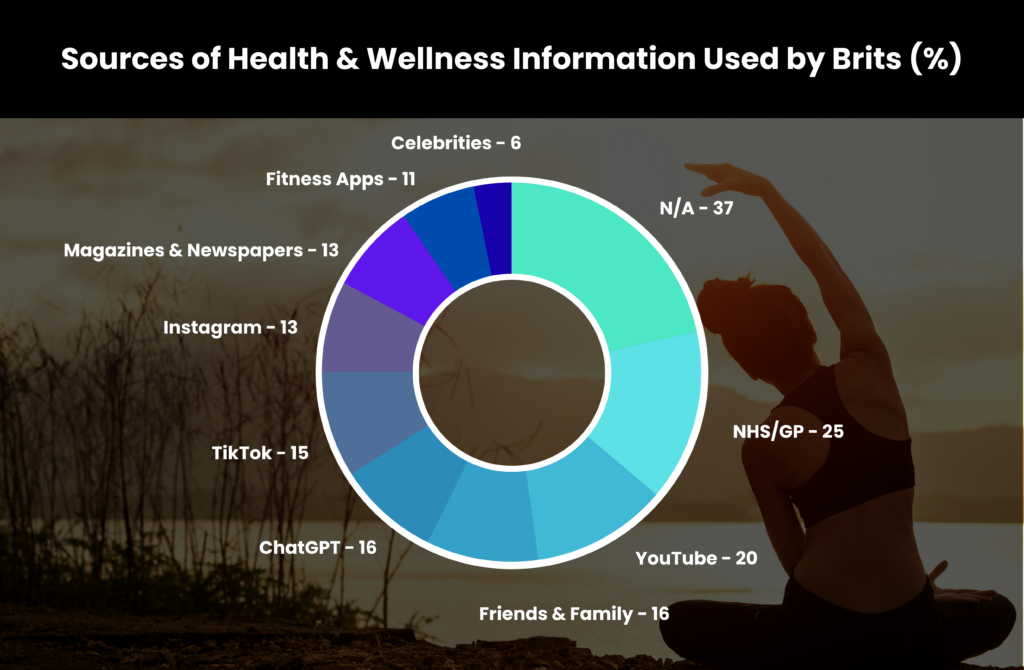
For many Brits, official health sources remain the first port of call. One in four people (25%) say they turn to their GP or the NHS when looking for reliable wellness information, showing that traditional medical authority still plays a central role in how we understand our health.
But, this isn’t the same story across generations. In fact, Gen Z showed a huge behavior shift when it came to sourcing health information. 1 in 3 (33%) admitted to using TikTok to source information, and 1 in 4 (28%) Gen Z’ers using Instagram. From short-form videos on gut health to viral fitness routines, these platforms have effectively become alternative search engines – even if the accuracy of the advice isn’t always guaranteed.
AI For Health Information – Can it Be Trusted?
While still a minority overall, 16% of Brits now use ChatGPT to find health and wellness information – a sign that AI is beginning to influence how people explore wellbeing topics. This trend becomes far more pronounced among younger generations, with 25% of Millennials, and 24% of Gen Z, using ChatGPT to source health information.
Interestingly, those who rate themselves as being in “very good health” are the most likely to experiment with newer sources of information. Over one in four (26%) of this group use ChatGPT for wellness advice.
At the other end of the spectrum, only 2% of people who describe their health as “very poor” use AI tools – possibly reflecting a greater reliance on traditional medical professionals when health feels more fragile or complex.
Half of Brits Are Following Unverified Wellness Advice
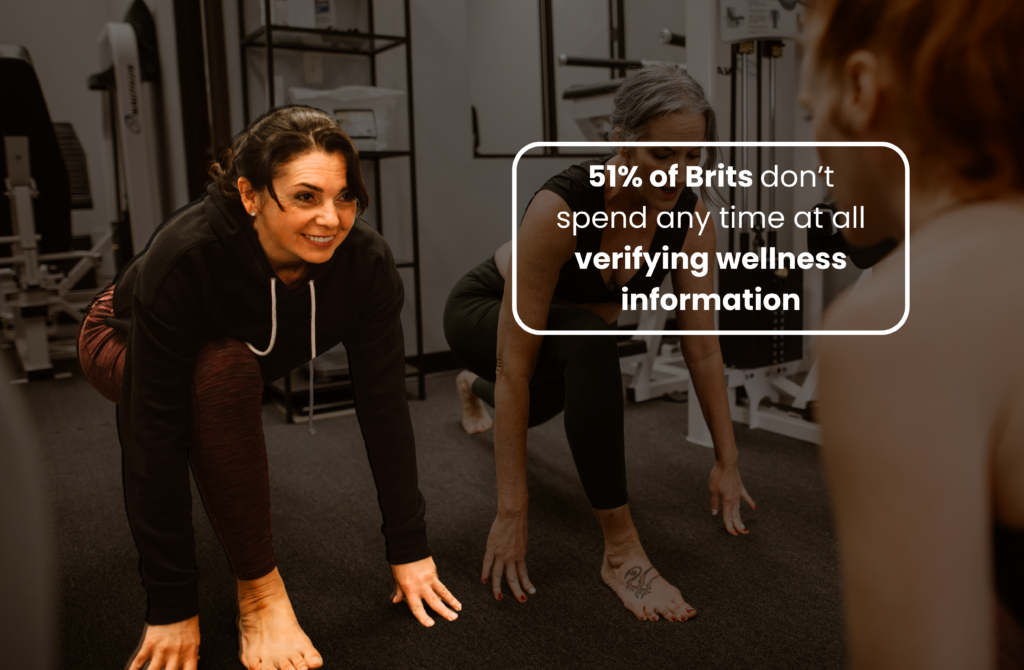
More than half of Brits are making wellness decisions without checking whether the advice they’re following is credible. In fact, 51% of people say they don’t spend any time vetting wellness information at all, suggesting that convenience and accessibility often outweigh accuracy when it comes to health-related choices.
This lack of verification is even more pronounced among older adults. Those aged 55 and over are the least likely to check the source of wellness advice, with 74% – nearly three in four – admitting they don’t vet information before acting on it.
Cost of Living Is Forcing Brits to Rethink Wellness
Rising living costs are having a direct impact on how Brits prioritise their wellbeing. Around one in three (30%) say they’ve had to cut back on wellness habits due to cost-of-living pressures, with some cities feeling the squeeze more than others. Over half of adults in Belfast say they’re planning to scale back, alongside 46% of people in Sheffield.
Our Tips For Helping Wellness Routines Stick in 2026
Making wellness routines stick in 2026 isn’t about chasing every viral social media trend – it’s about building habits that genuinely fit your lifestyle. Start by personalising your routine around your goals, preferences, and available time, rather than copying what works for someone else online.
Focus on the foundations first: consistent, good-quality sleep and staying hydrated can have a bigger impact on your energy, focus, and motivation than any viral wellness hack. Bringing an accountability buddy into the mix can also make a huge difference, turning good intentions into shared commitment.
Looking to elevate your wellness at home?
With a Badelandschaft, mini pool, oder Whirlpool from Platinum Spas, you can create a retreat-worthy experience at home. Get in touch with our team today to find out more. Or, book a visit to your nearest hot tub showroom to see our products in person!